
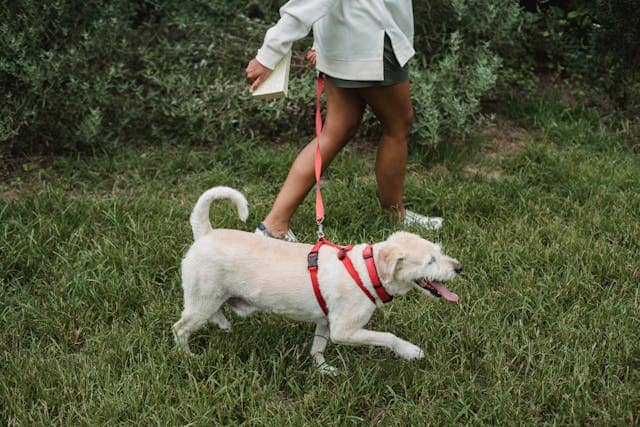
Is Your Dog Pulling On The Leash?

How to Stop a Dog From Pulling on the Leash During Walks
Walking your dog should be enjoyable. But for many owners, it turns into a frustrating tug of war.
If your dog drags you down the sidewalk, lunges toward distractions, or constantly strains against the leash, you are not alone. Leash pulling is one of the most common behavior problems dog owners face.
The good news is that leash pulling can be fixed with the right training approach. In this guide, you will learn why dogs pull, what mistakes make the problem worse, and the simple training methods that actually work.
If you live in the Charlotte area and need extra help, professional training can make the process much faster and easier.
Why Dogs Pull on the Leash
Dogs are not trying to be stubborn or dominant when they pull. Most of the time, they are simply doing what works.
Here are the main reasons dogs develop the habit.
1. Pulling Gets Them Where They Want to Go
Dogs naturally move faster than humans. When they pull and you keep walking, they learn something important:
Pulling works.
Every time a dog pulls and still reaches a smell, another dog, or a park, the behavior gets reinforced.
2. Too Much Excitement
Walks are full of stimulation. New smells, people, cars, and other animals can make dogs very excited. When excitement goes up, control often goes down.
Without training, most dogs struggle to stay calm on a leash.
3. Lack of Structured Training
Many dogs never receive clear leash training. Owners often assume dogs will learn naturally, but loose leash walking is a skill that must be taught.
4. Inconsistent Rules
Sometimes owners allow pulling and sometimes they correct it. This mixed message confuses the dog and slows progress.
Consistency is critical in dog training.
Mistakes That Make Leash Pulling Worse
Many well meaning owners accidentally strengthen the pulling habit.
Avoid these common mistakes.
Continuing to Walk When the Dog Pulls
If your dog pulls and you keep moving forward, the dog learns that pulling leads to progress.
This is the biggest reason leash pulling continues.
Using Too Much Force
Yanking the leash or constantly correcting the dog can increase frustration and excitement. In some cases it can also create fear or reactivity.
Training should focus on teaching the dog what to do, not just what not to do.
Letting the Dog Lead the Walk
When a dog always decides where to go, when to stop, and how fast to move, the pulling habit becomes stronger.
Structure helps dogs relax and follow guidance.
Step 1: Teach Your Dog That Pulling Stops the Walk
The first rule of loose leash walking is simple.
Pulling makes the walk stop.
When your dog begins to pull:
- Stop walking immediately
- Stand still and say nothing
- Wait for the leash to loosen
- Continue walking once the leash relaxes
At first this may feel slow, but dogs learn quickly when the rules stay consistent.
Within a few walks, many dogs start checking the leash tension.
Step 2: Reward the Right Behavior
Dogs repeat behaviors that bring rewards.
When your dog walks next to you with a loose leash:
• Praise calmly
• Offer a small treat
• Keep moving forward
This teaches your dog that staying close leads to good things.
Timing matters. Reward the moment the leash relaxes.
Step 3: Change Direction Often
Dogs that pull often get locked onto a target. Changing direction breaks that focus.
If your dog starts pulling:
Turn and walk the opposite direction.
Your dog will learn that paying attention to you is important during walks.
This technique helps build engagement and reduces frustration.
Step 4: Start Training in Low Distraction Areas
Trying to fix leash pulling in a busy park rarely works at first.
Start somewhere calm like:
• Your driveway
• A quiet sidewalk
• An empty parking lot
• Your backyard
Once your dog understands the rules, slowly introduce more distractions.
This step by step approach builds reliable behavior.
Step 5: Use the Right Equipment
Training works best when your equipment supports the process.
Helpful tools may include:
• A well fitted collar
• A standard 4 to 6 foot leash
• High value training treats
Avoid retractable leashes when training. They break easily and are not safe to use. Not only that, they encourage constant tension and make it harder for dogs to understand leash pressure.
How Long Does Leash Training Take?
Many owners ask how long it takes to fix leash pulling.
The answer depends on several factors:
• The dog's age
• How long the habit has existed
• Consistency of training
• The dog's energy level
With consistent practice, many dogs show noticeable improvement within a few weeks.
Severe pulling or high energy dogs may require more structured training.
When to Consider Professional Dog Training
Some leash problems go beyond basic pulling.
Professional training may help if your dog:
• Lunges toward other dogs
• Barks or reacts aggressively on leash
• Pulls so hard that walks become unsafe
• Ignores all commands outside
A professional trainer can identify the root cause and build a clear training plan.
This often speeds up progress and prevents frustration for both the dog and owner.
Dog Training Help in Charlotte NC
If you live in the Charlotte area and struggle with leash pulling, professional guidance can make a huge difference.
At Gruff Hound Academy, we help dog owners solve behavior problems and build reliable obedience. Our training focuses on clear communication, structure, and practical skills that work in real life situations.
Whether your dog is a young puppy or an adult with established habits, the right training approach can transform your daily walks.
If you are ready to enjoy calm and controlled walks with your dog, reach out today.
Visit Gruff Hound Academy to learn more or schedule a consultation.