Halloween Dog Safety

Halloween Dog Safety: Training Tips to Keep Your Dog Happy and Safe This Spooky Season
Halloween is an exciting time of year filled with costumes, candy, decorations, trick-or-treaters, and plenty of spooky fun. While families look forward to celebrating, Halloween can be a stressful and potentially dangerous holiday for our four-legged family members.
Between the constant doorbell ringing, unfamiliar costumes, loud noises, and tempting Halloween treats, dogs can quickly become overwhelmed. Even well-trained dogs may struggle with all the extra activity happening around them.
The good news is that a little preparation and some simple training exercises can help your dog enjoy Halloween safely.
Here are some important Halloween dog safety and training tips every pet owner should know before October 31st!
1. Practice Doorbell Training Before Halloween
One of the biggest challenges for dogs on Halloween is the constant ringing of the doorbell.
Every time someone approaches the house, your dog may become excited, bark excessively, jump on visitors, or try to run outside.
Start practicing before Halloween night.
Try these simple exercises:
- Have a family member ring the doorbell while you reward your dog for remaining calm.
- Teach your dog to go to a designated bed or mat when someone approaches.
- Reward quiet behavior instead of giving attention to excessive barking.
- Practice having your dog remain in place while you open the door.
Consistency is important. The goal is to teach your dog that the doorbell is not something to get overly excited about.
2. Keep Halloween Candy Away From Your Dog
Halloween candy is one of the biggest holiday hazards for dogs.
Chocolate, sugar-free candy containing xylitol, and certain other ingredients can be toxic to dogs. Candy wrappers can also cause choking or digestive problems.
Make sure everyone in your household understands that Halloween treats are for people, not pets.
Helpful tips include:
- Keep candy bowls on high counters.
- Store trick-or-treat bags somewhere your dog cannot reach.
- Teach your dog the "Leave It" command.
- Avoid allowing children to share candy with pets.
If your dog eats something potentially toxic, contact your veterinarian or an animal poison control service immediately. Do not wait for symptoms to appear.
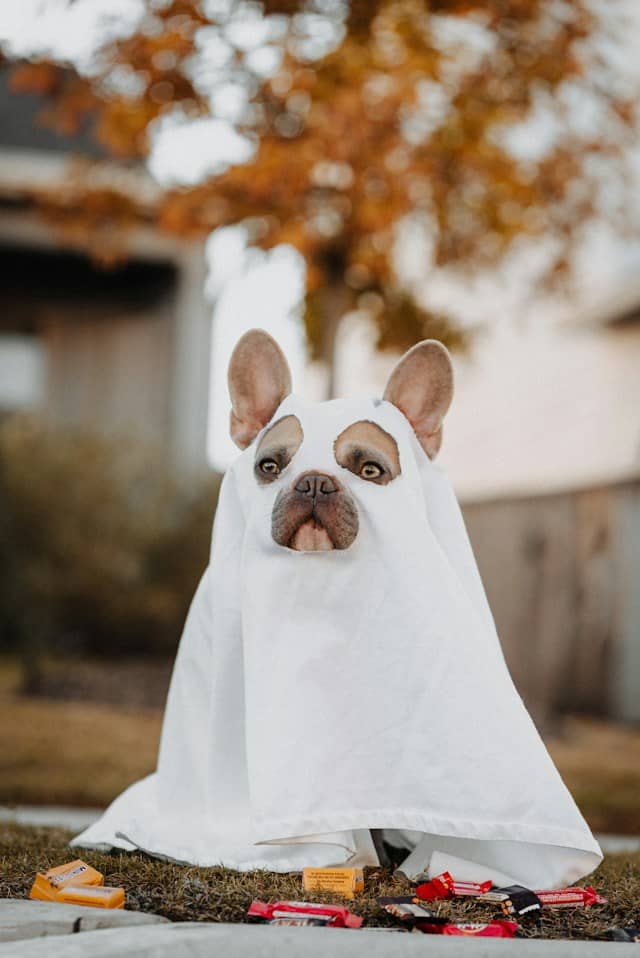
3. Help Your Dog Get Comfortable With Halloween Costumes
Halloween costumes can look strange and unfamiliar to dogs.
Masks, oversized hats, flowing capes, and unusual accessories may make even familiar people look frightening.
If you're planning to dress up your dog, introduce the costume gradually.
Start by placing the costume near your dog and rewarding calm behavior. Then allow your dog to sniff it before briefly trying it on.
Watch for signs of discomfort, including:
- Excessive panting
- Trying to remove the costume
- Freezing or refusing to move
- Tucked tails
- Repeated lip licking
Never force your dog to wear something that causes distress. Make sure any costume allows normal movement, breathing, and vision.
4. Create a Safe Space Away From Trick-or-Treaters
Not every dog enjoys visitors, crowds, or constant activity.
For anxious, nervous, or reactive dogs, Halloween night can be particularly overwhelming.
Consider setting up a quiet room away from the front door.
Include:
- Your dog's favorite bed.
- Familiar toys.
- Fresh water.
- A food puzzle or long-lasting enrichment activity.
- Calming background music or white noise.
This gives your dog somewhere comfortable to relax while the rest of the family celebrates.
5. Teach Your Dog Not to Run Out the Door
With people constantly coming and going, the risk of a dog slipping outside increases significantly on Halloween.
A reliable "Wait" command can help prevent accidental escapes.
Practice the following:
- Ask your dog to sit near the door.
- Slowly reach for the door handle.
- Reward your dog for remaining in place.
- Open the door a few inches.
- Reward calm behavior before gradually opening it farther.
- Release your dog only when you give permission.
For additional protection, consider using a baby gate or keeping your dog in a separate room during trick-or-treating.
Make sure your dog has proper identification and updated microchip information.
6. Watch Out for Halloween Decorations
Halloween decorations can be exciting for curious dogs, but some can create safety risks.
Electrical cords, artificial spiderwebs, plastic decorations, glow sticks, and small decorative objects may be tempting to chew or swallow.
Keep decorations out of reach and supervise your dog around new items.
Pay particular attention to candles and open flames. A wagging tail can easily knock over a candle or decoration.
Battery-operated candles are a safer alternative.
7. Practice Leash Manners Before Halloween Walks
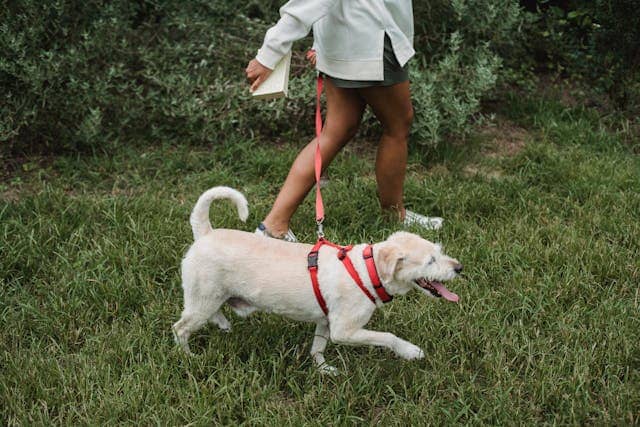
If you plan to take your dog out during Halloween festivities, make sure they are comfortable walking on a leash around distractions.
Costumes, children, other dogs, and unusual noises can make even a normally calm dog react differently.
Before heading out, practice:
- Walking without pulling.
- Sitting when people approach.
- Staying close when distractions appear.
- Responding to their name.
- Returning to you when called.
Keep your dog on a secure leash and avoid crowded areas if they become nervous around unfamiliar people.
Not every dog needs to participate in Halloween activities. Sometimes staying home is the best option.
8. Help Your Dog Become Comfortable With Unusual Sounds
Halloween can bring unexpected noises, including doorbells, excited children, barking dogs, and decorations that make strange sounds.
If your dog is sensitive to noise, begin preparing ahead of time.
Play recordings of common Halloween sounds at a low volume while rewarding relaxed behavior. Gradually increase the volume only if your dog remains comfortable.
Never overwhelm your dog by exposing them to loud noises all at once.
If your dog shows significant fear or anxiety, speak with your veterinarian or a qualified behavior professional about additional support.
9. Keep Your Dog Away From Pumpkins and Other Seasonal Foods
Pumpkins are a popular fall decoration, but not every seasonal food is safe for dogs.
Plain, cooked pumpkin without added sugar or spices is generally safe for many dogs in appropriate portions. However, decorative pumpkins that are moldy, rotten, or covered in paint can create health risks.
Keep your dog away from:
- Pumpkin pie.
- Chocolate desserts.
- Raisins and grapes.
- Foods containing xylitol.
- Alcoholic beverages.
- Spoiled or moldy pumpkins.
When in doubt, stick with treats made specifically for dogs.
10. Reward Calm Behavior Throughout the Night
Halloween is a great opportunity to reinforce good manners.
Instead of focusing only on correcting unwanted behavior, reward your dog whenever they make good choices.
For example:
- Reward sitting instead of jumping.
- Reward quiet behavior instead of barking.
- Reward staying on their bed instead of rushing the door.
- Reward checking in with you instead of reacting to distractions.
Positive reinforcement helps your dog understand which behaviors you want to see more often.
Small training sessions throughout the evening can make a big difference.
Make Halloween Fun for Your Dog, Too!
Halloween doesn't have to be stressful for your dog. With some preparation, consistent training, and a few safety precautions, your four-legged family member can enjoy the holiday right alongside everyone else.
Remember that every dog is different. Some love meeting new people and exploring the neighborhood, while others prefer a quiet evening at home.
Pay attention to your dog's body language, respect their comfort level, and never force them into situations that make them uncomfortable.
Most importantly, use Halloween as an opportunity to strengthen your dog's training and build better habits that will benefit them all year long.
Need Help Preparing Your Dog for Halloween?
Whether your dog struggles with excessive barking, jumping on visitors, leash pulling, or anxiety around unfamiliar people, professional training can help.
Don't wait until Halloween night to address unwanted behaviors. Building good habits takes consistency, patience, and the right training approach.
Contact Gruff Hound Academy today to learn more about our dog training programs and how we can help your dog become a calmer, more confident companion.
Let's make this Halloween safe, fun, and stress-free for the entire family!